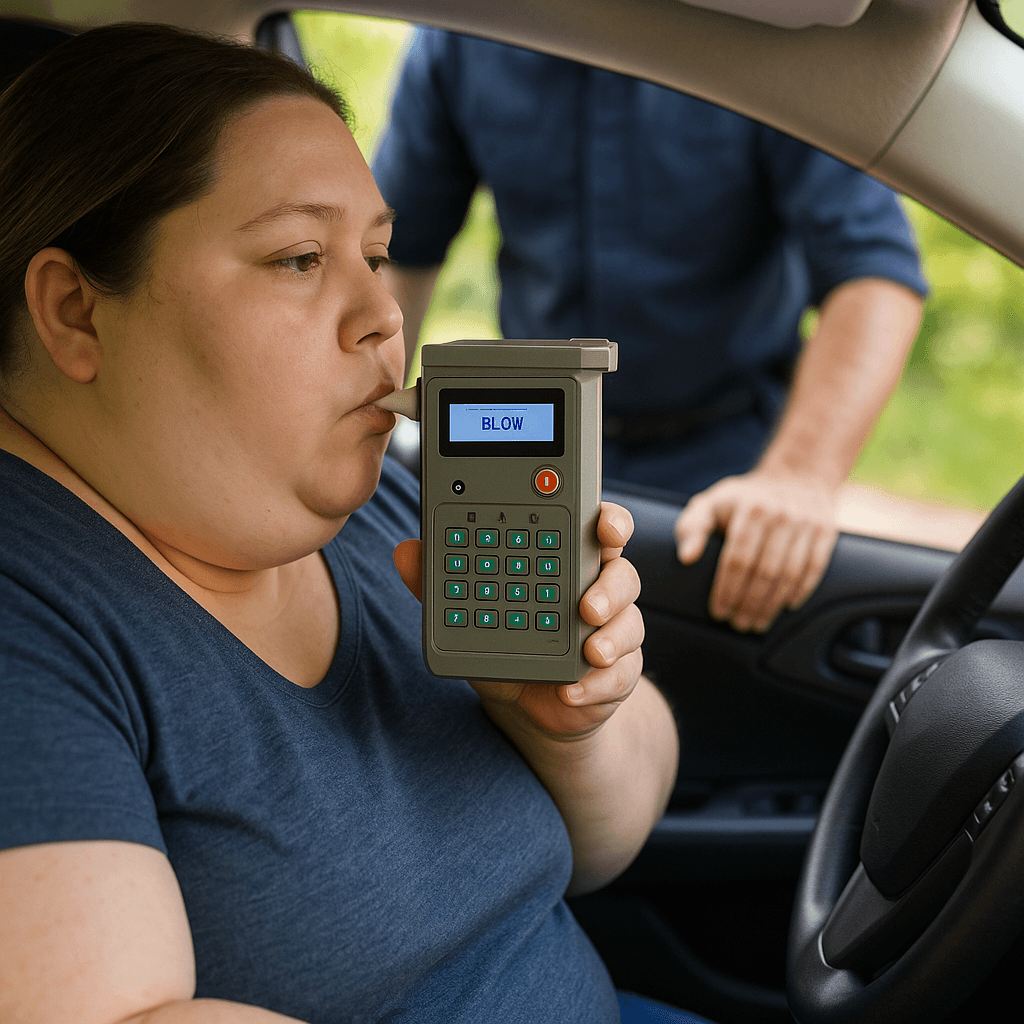
The Refusal Suspension Reality in Florida
You refused the breathalyzer during a traffic stop in Florida. The officer confiscated your license on the spot and handed you a temporary permit valid for 10 days. You now face a 12-month administrative suspension under Florida Statutes § 322.2615 — the implied consent law — regardless of whether you're ultimately convicted of DUI. This is an administrative action by the Florida Department of Highway Safety and Motor Vehicles (DHSMV), not a criminal court penalty.
The confusion starts when you try to figure out what comes next. Most online resources talk about SR-22 insurance, but Florida doesn't use SR-22 for DUI-related suspensions. Florida is one of only two states — along with Virginia — that requires FR-44 filing instead. FR-44 mandates substantially higher liability limits: $100,000 per person, $300,000 per accident for bodily injury, and $50,000 for property damage. These limits are roughly ten times Florida's standard minimum coverage, and they apply the moment you want to drive legally again — including during any hardship license period.
Compare car insurance rates in your state
Get quotes from licensed carriers — no obligation, no spam, results in minutes.
Get Your Free QuoteHard Suspension for Refusal
90 days
Florida imposes a mandatory 90-day hard suspension period for a first breathalyzer refusal under FSS 322.2615(7). You cannot drive at all during this window — no hardship license, no work permit, no exceptions. The 90-day clock starts the day DHSMV processes the suspension, not the day of arrest.
Florida Statutes § 322.2615(7)
Why FR-44 Instead of SR-22
FR-44 is Florida's high-risk financial responsibility certificate. It proves to DHSMV that you carry liability coverage at the elevated minimums the state mandates for DUI-related offenses. The form itself is filed electronically by your insurance carrier directly to DHSMV — you don't file it yourself. When you purchase an FR-44 policy, the carrier transmits the certificate immediately through Florida's Insurance Tracking System (FITS).
SR-22 filings, used in most other states, typically require only the state's minimum liability limits. Florida rejected this framework for DUI offenders because implied consent violations and DUI convictions are treated as high-consequence offenses. The legislature codified higher coverage minimums to ensure adequate victim compensation in future accidents. If you later move to another state, that state may accept your Florida FR-44 as equivalent to their SR-22 requirement, but you must verify with the new state's DMV.
The structural confusion happens because breathalyzer refusal triggers the FR-44 requirement immediately, but you cannot obtain a hardship license until you serve the 90-day hard suspension. Many drivers assume they only need FR-44 at reinstatement — 12 months out — and don't realize they must carry it during the hardship period if they want restricted driving privileges after day 90.
You cannot obtain a Business Purpose Only License until you serve the full 90-day hard suspension and file FR-44 proof with DHSMV. Both conditions are mandatory.
Business Purpose Only License Eligibility

To apply for a BPOL after a refusal suspension, you must provide proof of enrollment in a DHSMV-approved DUI program, submit an FR-44 insurance certificate showing active coverage at the required limits, complete the hardship application form, pay a $12 application fee, and provide proof of hardship — typically a letter from your employer on company letterhead verifying your work schedule and stating that you have no alternative transportation. DHSMV processes applications at local driver license offices; you cannot apply online for a refusal-suspension hardship license.
The BPOL restricts you to business purposes only: driving to and from work, attending school, attending church, and traveling to medical appointments. Personal errands are not covered. You may also drive for your employer's business purposes if your job requires it. Florida does not impose specific time-of-day restrictions statewide, but your driving is limited to the approved purposes listed on the license. If you're stopped outside those purposes, the BPOL is revoked immediately and you serve the remainder of the original suspension with no further hardship eligibility.
Related Articles




Finding a Carrier That Will File FR-44
Not all carriers write FR-44 policies, and many standard-tier carriers will not quote breathalyzer refusal cases at all. Acceptance Insurance, Bristol West, Dairyland, The General, Infinity, and National General are confirmed FR-44 writers in Florida and specialize in high-risk drivers. Progressive, Geico, State Farm, Allstate, and Nationwide also file FR-44 in Florida, but their willingness to write a refusal case varies by underwriting criteria and your broader profile — age, prior violations, claims history, and whether you're adding FR-44 to an existing policy or seeking a new one.
The cleanest path is a standalone FR-44 non-owner policy if you do not currently own a vehicle. Non-owner FR-44 satisfies DHSMV's filing requirement and provides liability coverage when you drive a borrowed or rental vehicle. Monthly premiums for non-owner FR-44 policies typically range from $90 to $180 depending on your age, county, and whether you have other violations on your record. If you own a vehicle, you'll need a standard auto policy written at FR-44 limits — expect monthly premiums between $220 and $400 for minimum coverage.
Timing matters. Carriers transmit FR-44 certificates to DHSMV electronically within one business day of policy binding in most cases, but DHSMV's processing lag can add 3 to 5 business days before your record reflects active FR-44 status. Apply for your BPOL only after confirming that DHSMV shows the filing as active — the driver license office will not process your hardship application without it. If your FR-44 lapses at any point during the three-year filing period — because you cancel the policy, miss a payment, or switch carriers without maintaining continuous coverage — DHSMV suspends your license again immediately, and you start the reinstatement process over.
The three-year FR-44 filing period begins the day you obtain the hardship license or reinstate fully, not the day of the original suspension. If you serve the full 12-month suspension without obtaining a BPOL, the three-year clock starts at reinstatement. If you obtain a BPOL at day 91, the clock starts then. You must maintain continuous FR-44 coverage for the entire period or face re-suspension.
BPOL Application Fee
$12
Florida charges a $12 hardship license application fee, processed at the time you submit your BPOL application at a local driver license office. This fee is separate from the $45 reinstatement fee you'll pay when the full suspension period ends and you apply to restore your unrestricted license.
DHSMV fee schedule
Reinstatement After the Full Suspension Period
When the 12-month suspension period ends, reinstatement is not automatic. You must pay a $45 reinstatement fee, complete the DUI program (enrollment alone is not sufficient — you must finish all classes and the evaluation), and maintain active FR-44 coverage. If you obtained a BPOL during the suspension, you've already satisfied the FR-44 and DUI school enrollment conditions — you just need proof of program completion and payment of the reinstatement fee to convert to an unrestricted license.
If you did not obtain a BPOL and served the full 12 months without driving, you must still file FR-44 before DHSMV will reinstate you. The filing period still runs for three years from reinstatement. Completing DUI school, paying the fee, and filing FR-44 are non-negotiable statutory prerequisites under Florida Statutes § 322.28. DHSMV will not process reinstatement without all three documented in their system.
Compare FR-44 Carriers Now
You're 90 days away from BPOL eligibility if you're starting the refusal suspension today, or you're approaching reinstatement if your suspension period is nearly complete. Either way, the next step is securing FR-44 coverage from a carrier that writes refusal cases in Florida. Premiums vary significantly by carrier, county, and your broader profile — direct comparison across multiple non-standard and standard carriers is the only way to find coverage that fits your budget. Start quotes now so you're ready to file the moment your eligibility window opens.